
Why I Design for Those Moving on From Divorce
When I was seven years old, my dad moved out.

His new place leaned hard into bachelor territory — sparse, modern, unfamiliar. There was a room for me and my sister with twin beds and new bedding, but nothing that felt like us. Nothing that felt like home. Divorce is destabilizing enough on its own, and I clung to the familiar the way kids do, which was my mom’s hosue. Without understanding why, I started avoiding his house. And by default, I spent very little time with my dad growing up. It wasn't until much later that I understood the role his home played in that distance. I always felt like a guest.
I carry that with me every day.
Thirty years later I was ending my own ten-year marriage and moving into a two-bedroom rental condo. I took almost no furniture with me — most of it had been chosen out of compromise, and I didn't want daily reminders of what I was leaving behind. What I wanted was to start over. To make my own decisions, unfiltered, for the first time in a long time.
So I did. I found a big, comfy chair I could sink into with a book. A sofa with a bench cushion — no navigating the cracks between cushions — because that's what I like. On my porch I put an Adirondack chair and containers overflowing with flowers, a quiet place that was entirely mine. I filled the walls with art that reflected my taste, not a compromise. All of it served as a salve and the beginning to taking control.
Some dear friends gave me a large "H" to hang on the wall — a nod to reverting to my maiden name. That simple gift still hangs in my home today. It marks the moment I became myself again. Not a version of myself shaped around someone else's life. Just me.
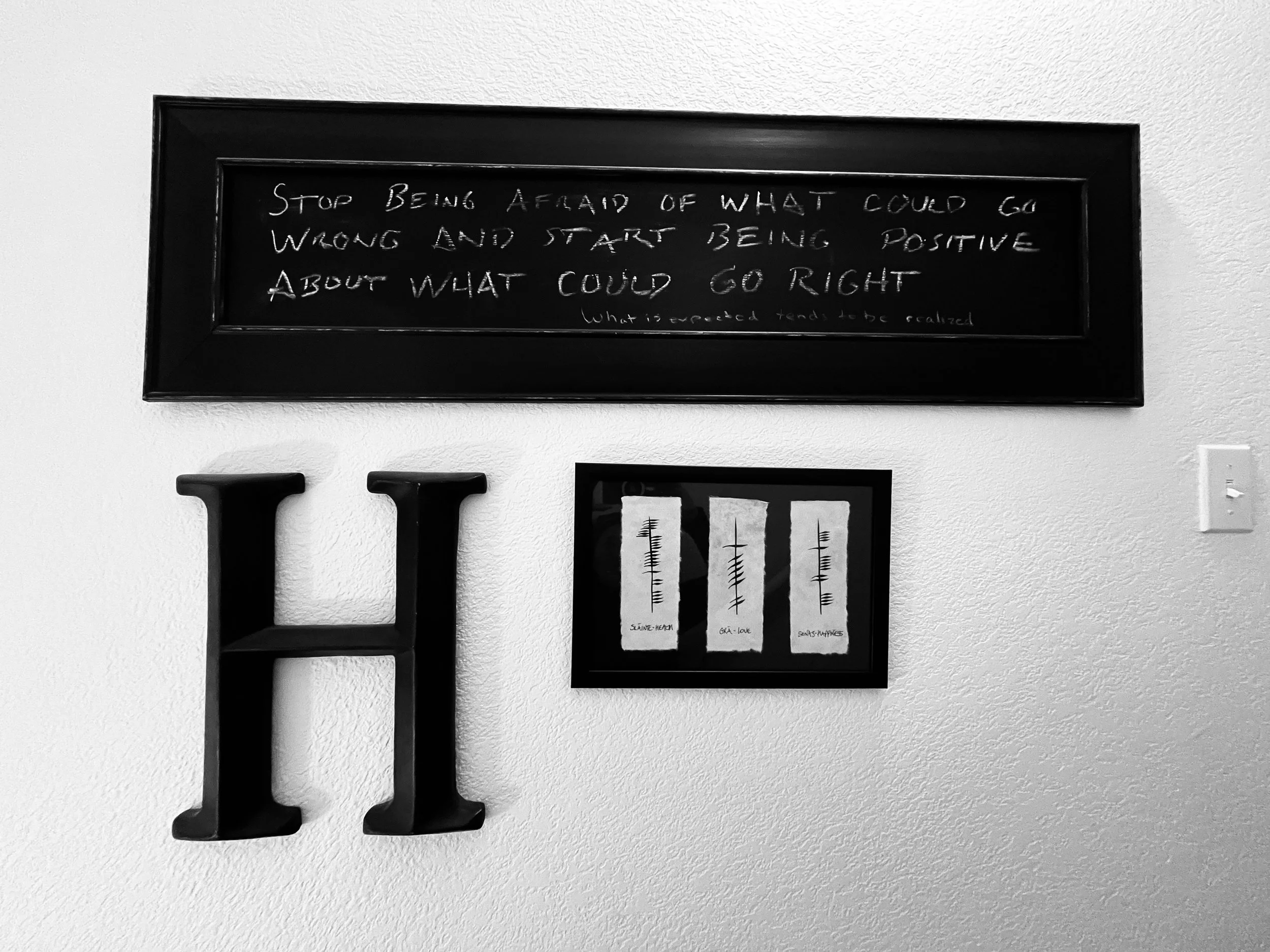
“Referencing my maiden name, the letter ‘H’ became a daily reminder of who I was returning to.”
I wasn't an interior designer then. That came later. But I remember vividly how that space made me feel. Secure. Grounded. Like there was a thread connecting who I was before the marriage to who I was becoming. That feeling gave me the confidence to move forward — not just in my home, but in my life.
That's why I do this work.
I use those experiences — both as a child navigating two very different homes and as an adult rebuilding from scratch — to help people going through divorce create spaces that don't just look good. Spaces that help them feel like themselves again. Spaces that give them something to look forward to coming home to.
For parents, that means being intentional about creating spaces where your kids don't feel the whiplash of transition. Where your new home feels like an extension of the familiar, not a departure from it. A place they want to be. That continuity doesn't happen by accident — it takes thought and care and someone who knows why it matters.
I know why it matters. And I'm here to help.
Does this resonate with you?
Whether you are in the middle of a divorce, recently through it, or still living in a space that never quite became home — I would love to help you create one that does.
Book a free discovery call with Petite Design Studio. No pressure, just a conversation.